Oh hey there 👋
It has been a few weeks since we’ve been in your inbox, but we’re thrilled to be delivering the first edition of Weekend Rounds this year! While you were making (and maybe breaking…) resolutions for 2026, the veterinary world has trucked on. As it’s our first edition of the year, we thought it would be best to round up the three trends that we think are worth watching this year, plus a number of helpful links to catch up on the month we took off.
Here’s what we’re covering:
🌍 2026 Trends to Watch
🧠 How to start the year right
📆 The last month as covered by VIN News
🚀 Quick hits
Here is to hoping you handle 2026 as well as this deer:

🌍
2026 Trends to Watch
An occupational hazard of writing 181 newsletters over the past 4+ years is that you develop a fairly strong macro lens on where veterinary medicine is, and where it’s heading.
1) The “value squeeze” meets the transparency era
Across 2024–2025, many markets saw softer visit growth alongside higher prices. In response, clinics often protected revenue through fee increases, while some clients delayed or declined care. The AVMA has flagged declining “foot traffic” and the resulting pressure on productivity. At the same time, pet services including veterinary care, have remained inflationary, keeping affordability front-of-mind for clients.
Heading into 2026, the key question is how far price scrutiny and transparency expectations will spread. In the UK, the Competition and Markets Authority (CMA) has proposed reforms requiring published price lists, clearer client information, and limits on prescription-related fees—explicitly because consumers struggle to compare options today. Even for practices outside the UK, the direction of travel is hard to ignore.
We think the clinics that win in 2026 will be those that can explain value—outcomes, service levels, continuity of care—with the same clarity they explain the invoice. Tools like the value matrix from the Relationship-Centred Veterinary Medicine Group at OVC can help practices structure these conversations and better align expectations:
2) Consolidation takes a fork evolving into “platform veterinary medicine” and causes a backlash
Consolidation itself isn’t new, but the emphasis is shifting. The focus is moving from simply acquiring clinics to building ecosystems: practice groups paired with referral networks, pharmacies, insurance products, and membership plans. Large players like Mars have operated this way for years, but newer entrants—such as Chewy—are increasingly spanning food, pharmacy, and clinical care. AAHA continues to note the growing presence of corporate ownership and private equity across the profession.
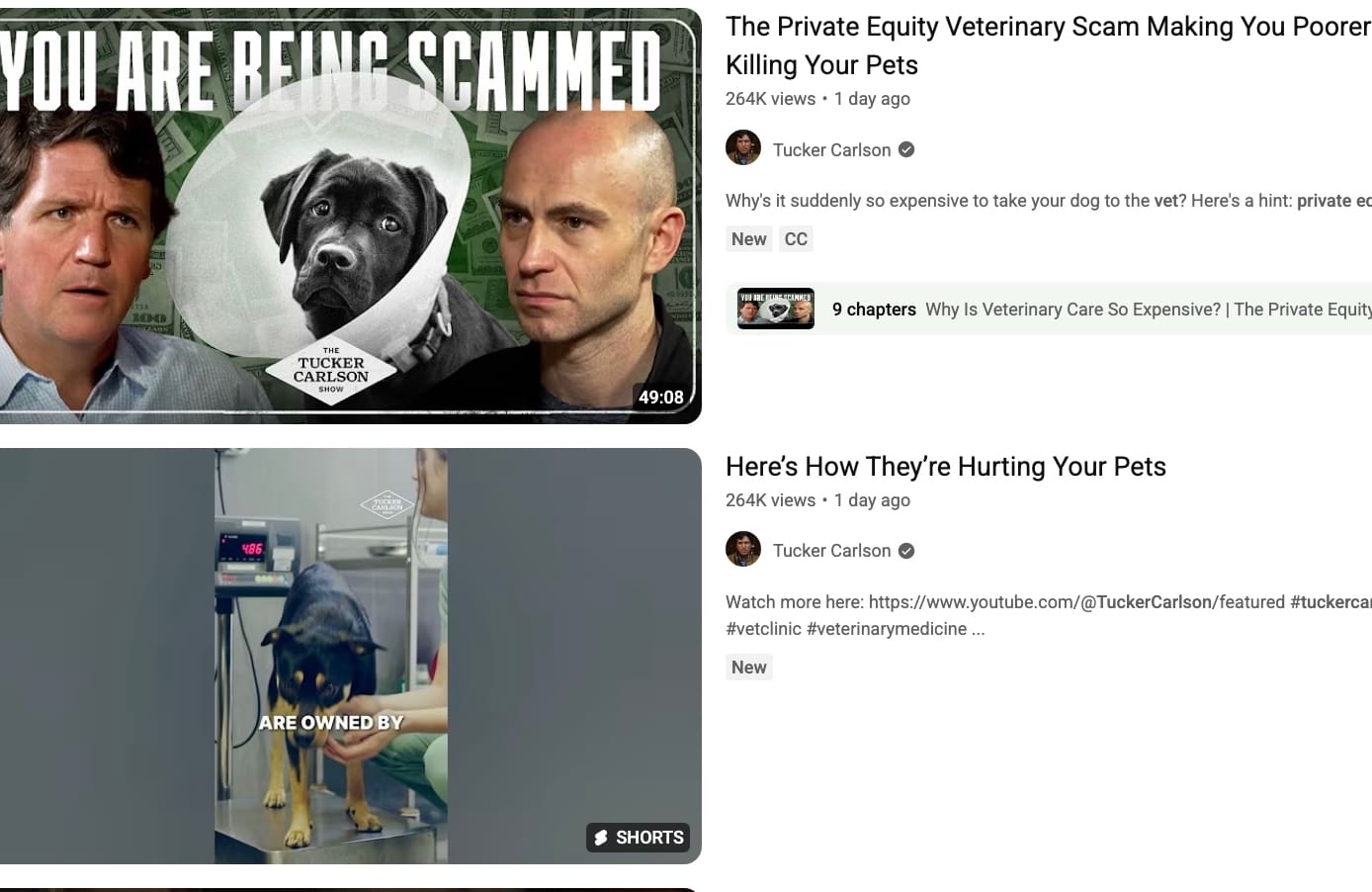
At the same time, there are growing signs of backlash. It’s always difficult to separate signal from noise during periods of workforce strain, but many veterinarians appear increasingly fatigued by corporate practice models and nostalgic for independent care. Policymakers are also paying attention. U.S. Senators Elizabeth Warren and Richard Blumenthal have publicly questioned JAB about consolidation’s effects on pricing and working conditions.
What we’re watching in 2026 is how consolidation, particularly across clinics and pet insurance, shapes downstream care pathways and pricing leverage. Coverage decisions, pre-authorization friction, and the use of claims data to influence “recommended care” all matter. Even JAB’s own reporting emphasizes insurance platforms integrated into broader pet-services ecosystems.
The likely result is a growing tension: strong demand for independent practice alongside competition from highly bundled, vertically integrated experiences. This loops back to Trend #1. Clinics that thrive will differentiate through exceptional communication, continuity of care, and smart partnerships—whether referral relationships or wellness plans done well.
3) The augmented veterinarian: AI workflows and biosecurity
It’s no secret that we spend a lot of time thinking about AI at Obi. The past few years have brought rapid adoption of AI-supported documentation, triage, client communication, and diagnostics. VIN has noted the proliferation of veterinary AI scribes, while NAVC and VIC-style guidance highlights both the promise (speed, consistency) and the risks (accuracy, privacy, governance). Investment is following suit, with clinic-operations platforms increasingly pitching AI “operating systems” for practices.
At the same time, infectious disease developments—such as H5N1 in dairy cattle—have reinforced that veterinarians are critical infrastructure for surveillance, biosecurity, and One Health responses. This combination is driving demand for better diagnostics, reporting pipelines, and coordination across systems.
Our view is that in 2026, winners will treat AI like a clinical instrument. That means trained users, quality assurance, clear policies, and measurable ROI. The challenge is that vendors have not yet given practices good tools to evaluate performance or compare outcomes. Transparency remains limited, and standardized evaluation methods are still rare.
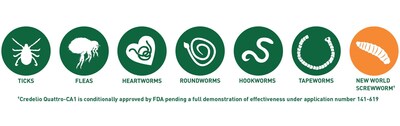
Whether you’re already on the AI train or resisting it like screwworms at the border, there’s no escaping the fact that AI is a transformative technology veterinary teams will need to engage with. We’ll say it here first: Obi is committing to expanded AI education and a dedicated course in 2026. In the meantime, we recommend this recent report on the rise of AI scribes from our friend Adam Little and our blog for a primer on large language models:

🧠
How to start the year right
Happy New Year! As we head into 2026, we’re grateful to have you as part of the Obi Veterinary Education community.
Whether you jump into an on-demand lesson for a quick refresher between cases or power through your CE all at once to meet annual requirements, we’re glad to be part of your learning journey and proud to support the work you do every day.
If you’re looking to get a head start on your CE for the year, use code NEWYEAR26 to receive 20.26% off a yearly subscription. You’ll get access to over 42 hours of on-demand lessons across dentistry, radiology, ophthalmology, and more—designed to be practical, efficient, and clinic-ready.

Offer equivalent to $70.71 off your first payment. Subscription automatically renews at $349 per year, unless cancelled. Offer valid for new members only, until January 31, 2026.
📅
Last month on VIN News
Not all news is created equal. So we thought we would carve out a section for the best of the best in the veterinary space: the incredible team at VIN News. The rest of the quick hits are available below.




Does Weekend Rounds have you thinking, “I could do this”? If so, first—email us. Seriously. We’re always happy to share the keyboard.
But if you’re fully committed to launching that niche newsletter on optimal dog toenail aesthetics or the peanut butter that freezes just right in a Kong, you might as well use good tools. We write Weekend Rounds on beehiiv. They’re genuinely solid, refreshingly straightforward, and truly better than the alternatives.
If you’re curious, you can check them out below. Clicking the link helps support Weekend Rounds and makes it a little easier for us to keep showing up in your inbox every week. No pressure, but serious appreciation if you do.

Stop planning. Start building. With beehiiv, this the end of the year is a great time to get ahead. Build a website with AI, launch a newsletter in minutes, and start earning through the Ad Network. Use code BIG30 for 30 percent off your first three months. Start building for 20 percent off today.
🚀
Quick Hits
Here are some of the other stories that caught our eye and we're following this month from around the veterinary world and animal kingdom: